MRI Data Augmentation Using GANs (MTHE 493 Thesis)
Challenge
Machine learning in healthcare has a lot of potential uses, one of them being faster and more accurate diagnosis. Medical data collection with the sole use of building datasets is too expensive, which often leaves researchers with small datasets. In addition to being small, they often have issues with class imbalance and do not reflect real-world data.
Approach
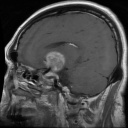
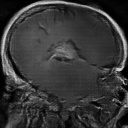
The team and I applied Generative Adversarial Networks (GANs) to address the issues of data scarcity and class imbalance by exploring the use of synthetic data’s ability to augment and replace small datasets. We were able to produce GANs that closely approximated the distribution of the dataset, and determine the optimal parameters and best loss function.
Contribution
- Designed and implemented the GAN architecture in Python with Tensorflow and Keras
- Implemented a class of parameterized loss functions
- Trained and tested models, generated synthetic images for reports
- Wrote sections of the final thesis, including the background, methodology, and future work